Sunday, 21 October 2012

Creative Writing at The Haven - Goddesses 2

Greece and Rome - 12th October  2012


So many goddesses; so little time.  So sticking to our triple theme I went for the Judgement of Paris and the Apple of Dischord.  BEAUTY was much discussed. 


Venus/Aphrodite; Minerva/Athena ; Juno/Hera


The Judgement of Paris
The gods and goddesses, as well as various mortals, were invited to the marriage of Peleus and Thetis(the eventual parents of Achilles). Only the goddess Eris (Discord) was not invited, but she arrived with a golden apple inscribed with the word kallistÄ“i ("to the fairest one"), which she threw among the goddesses.  AphroditeHera, and Athena all claimed to be the fairest, and thus the rightful owner of the apple.

We also wondered how poor Venus felt when she arrived at Cyprus with not a stitch on her and no past!


Aphrodite is the Greek goddess of love, beauty, pleasure, and procreation. Her Roman equivalent is the goddess Venus.
According to Hesiod's Theogony, she was born when Cronus cut off Uranus' genitals and threw them into the sea, and from the sea foam (aphros) arose Aphrodite. Thus, Aphrodite is of an older generation than Zeus.
Aphrodite is usually said to have been born near Paphos, on the island of Cyprus, for which reason she is called "Cyprian", especially in the poetic works of Sappho. Her chief centre of worship was at Paphos, where the goddess of desire had been worshipped from the early Iron Age in the form of Ishtar and Astarte.
Because of her beauty, other gods feared jealousy would interrupt the peace among them and lead to war, so Zeus married her to Hephaestus, who was not viewed as a threat. Aphrodite had many lovers, both gods such as Ares, and men such as Anchises. Aphrodite also became instrumental in the Eros and Psyche legend, and later was both Adonis' lover and his surrogate mother. Many lesser beings were said to be children of Aphrodite.

A game we played was to Design a Goddess - what characteristics and attributes would you give to the ideal goddess?  

Sue came up with this and we all liked this deity:

Designer Goddess

Sue

I am the goddess to heal broken hearts.

I carry with me: rescue remedy,
Chocolates (in any flavour you desire)
Soft, snuggly blankets to envelop you in a hug
A limitless credit card
So you can buy whatever you desire

I am an expert needlewoman
And will stitch your heart together
With beautiful golden threads, so fine
That they cannot be seen
By the naked eye.

I am the goddess to heal broken hearts.


Creative Writing at The Haven - Goddesses 1

Celtic Myths - 5th October 2012 

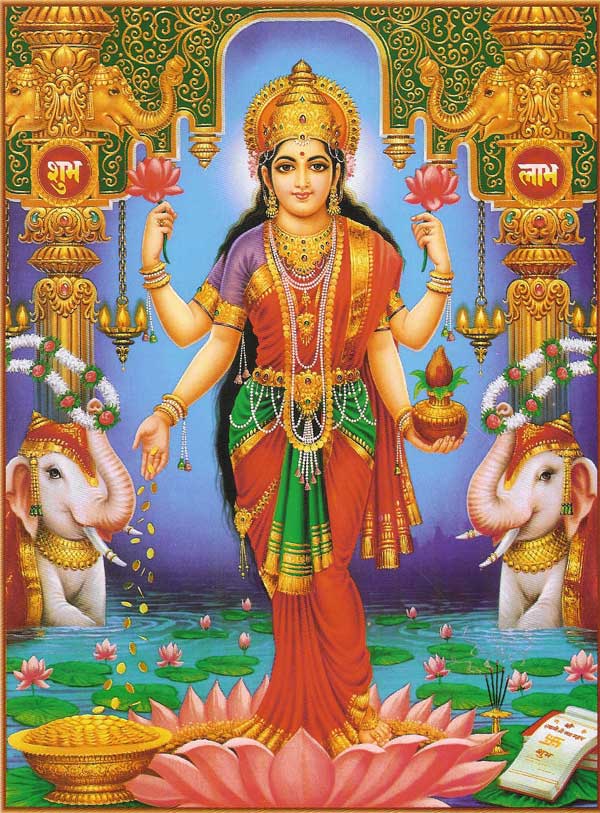
This series of 6 workshops has an overarching theme of "Goddesses".  We began with the Celtic world.

The story of Ceridwen is well known, and like many other ancient myths it involves transformation: 

Legend
According to the late medieval Tale of Taliesin, included in some modern editions of the Mabinogion, Ceridwen’s son Morfran was hideously ugly, so Ceridwen sought to make him wise. She had a magical cauldron that could make a potion granting the gift of wisdom and poetic inspiration. The mixture had to be boiled for a year and a day. Morda, a blind man, tended the fire beneath the cauldron, while Gwion Bach, a young boy, stirred the concoction. The first three drops of liquid from this cauldron gave wisdom; the rest was a fatal poison. Three hot drops spilled onto Gwion's thumb as he stirred, burning him. He instinctively put his thumb in his mouth, and instantly gained great wisdom and knowledge.
Ceridwen chased Gwion. He turned himself into a hare. She became a greyhound. He became a fish and jumped into a river. She turned into an otter. He turned into a bird; she became a hawk. Finally, he turned into a single grain of corn. She then became a hen and ate him. When Ceridwen became pregnant, she knew it was Gwion and resolved to kill the child when he was born. However, when he was born, he was so beautiful that she couldn't do it. She threw him in the ocean instead, sewing him inside a leather-skin bag. The child did not die, but was rescued on a Welsh shore – near Aberdyfi according to most versions of the tale – by a prince named Elffin ap Gwyddno; the reborn infant grew to became the legendary bard Taliesin.

One writer gave us this in response:


She Became
(inspired by the legend of Ceridwen)

The fish that jumped
The otter that leapt
The hen that pecked

The child conceived
The child is born
The beautiful child, from a speck of corn

Yvette


As a keynote poem we looked at "Gloria" by Ruth Fainlight.  Here is part of it:


Gloria
Ruth Fainlight
(an extract)


However she’s personified
Or represented,
I won’t forget
How space expands inside me,
Can easily contain
A million goddesses or concepts.

Sophia, Anima, or Kali,
Black or white, death or wisdom,
The central fire
Or all-engulfing water:

My muse is in myself;
And as all past and future
Exist between my own two eyes,
My living need
Is symbolised
By her resplendent figure.


Other references:  The poem "The White Goddess" by Robert Graves; also the poem "The Song of Wandering  Aengus" by W.B. Yeats (they are strangely similar).


Friday, 31 August 2012

Creative Writing at The Haven - starts October


   Creative Writing
                                         
   
   at The Haven
   37 St Owen Street,
   Hereford HR1 2JB
  
With Sally Givertz

Fridays in the Rose Room
10am to Noon

Suggested donation £6 per week

All welcome

Next weekly series starts:
Friday October 5th, 2012

Dates:  5th Oct, 12th  Oct, 19th Oct ( 1 week break)
2nd Nov, 9th Nov (I week break) 23rd Nov.

For details please contact
Sally on 01989 563370

OR The Haven
014320 361061


We will be exploring beliefs about goddesses from  different cultures from the small domestic to the Great Goddess.


As usual we will use a mix of poetry, pictures, music and objects to start us on our writing journey. Come and join us. 


Monday, 25 June 2012

What's Next? New series for Autumn 2012

We are all beginning to disperse for the summer and creative writing sessions have stopped for the time being.  Confirmed so far for autumn 2012:


Creative Writing at the Haven,37 St Owen Street,Hereford, HR1 2JB


Starting Friday October 5th, Rose Room, 10am to 12 noon.  6 weekly sessions.Open to all for a £6 voluntary donation to the Haven. 


I am also hoping to get funding for other sessions such as "Segments" held monthly at the Museum Resource & Learning Centre. I will put up new posts as and when new things are confirmed. 


Have a good summer.

Sally    01989 563370 for more information.


Monday, 11 June 2012

Haven - Aspects of Water 6 - Drinks June 8th

A nice cup of tea British style

Water is a good excuse to talk about drink in all its many manifestations. 

To narrow the choice a little we focused on some of Britain's most popular bevvies;

Tea, gin and whisky.

First some famous quotations about TEA:
“If you are cold, tea will warm you; if you are too heated, it will cool you; if you are depressed, it will cheer you; if you are excited, it will calm you.”


But some people demand something stronger, especially the creatives.....


A Drink With Something In It

There is something about a Martini,

A tingle remarkably pleasant;

A yellow, a mellow Martini;

I wish I had one at present.
There is something about a Martini,
Ere the dining and dancing begin,
And to tell you the truth,
It is not the vermouth--
I think that perhaps it's the gin.


Scotch Drink - Robert Burns

Gie him strong drink until he wink,
That's sinking in despair;
An' liquor guid to fire his bluid,
That's prest wi' grief and care:
There let him bouse, an' deep carouse,
Wi' bumpers flowing o'er,
Till he forgets his loves or debts,
An' minds his griefs no more.


a quotation to round off our Water theme:Our continual mistake is that we do not concentrate upon the present day, the actual hour, of our life; we live in the past or the future; we are continually expecting the coming of some special moment when our life will unfold itself in its full significance. And we do not notice that life is flowing like water through our fingers...Father Alexander Elchaninov (from The Diary of a Russian Priest)


Haven - aspects of water 5 - Cleansing & Healing June 1st


Water has long been revered as a source of healing - cleansing both body and soul. Many civilisations associate "dirt" with "sin" and try to wash them both away. There are numerous metaphors to this effect. 

Oddly, the Romans seem to have been rather bad-tempered when their clothes were stolen in the Baths and wrote "curse" tablets to revenge themselves on the thieves.  Apparently some of the curses were very bloodthirsty and totally disproportionate to the crime. The waters of "Aquae Sulis" didn't seem to calm and soothe their spirits as one might hope...

This is a curse tablet found at Bath 


Britain has a long history of sacred springs going back to the Celtic worship of the goddess Sulis.  Later, as early as the 17th century the Brits discovered the virtues of fashionable sea-bathing:

In the English coastal town of Scarborough in 1626, a Mrs. Elizabeth Farrow discovered a stream of acidic water running from one of the cliffs to the south of the town. This was deemed to have beneficial health properties and gave birth to Scarborough Spa. Dr Wittie's book about the spa waters published in 1660 attracted a flood of visitors to the town. Sea bathing was added to the cure, and Scarborough became Britain's first seaside resort. The first rolling bathing machines for bathers are recorded on the sands in 1735

Scarborough

Sea Ritual

Sonia

Cupped hands scoop seawater and
Cradling gently the precious elixir
The children walk carefully up the beach

The water has trickled a little
Through their tiny hands

Their precious grandmother envelops
Them with her smile as they approach
And pat her face and hair
With  the cool kiss of the sea
as she sits against the sea wall
Watching their activities

She has always had her sea ritual –
A walk to the water’s edge
To splash her face in the sea water

She has taught her child
And now her grandchildren
Understand the importance
Of this loving gesture
They will bathe her face


The Tao te Ching associates water with goodness: 

Tao Te Ching  8

The highest good is like water

The highest good is like water
nourishing life effortlessly
flowing without prejudice
to the lowliest places.
It springs from all
who nourish their community
with a benevolent heart
as deep as an abyss,
Who are incapable
of lies and injustices,
Who are rooted in the earth,
and whose natural rhythms of action
play midwife to the highest good
in each joyful moment.


The Highest Good

Sonia

When self is lost
The highest good becomes
Part of life’s flow
Imparting time and care
As a natural spring

The shallow water holds
All that has come to rest
The debris caught
In the weeds of time

At last freed
It will flow to the sea


A last word :  

Remember, cleanliness is next to godliness and keep a good watch on your toga when you take a dip.