Wednesday, 25 April 2012

Haven - Aspects of Water 1 - Metaphors & Proverbs

Even if you sit at the bottom of the stream, you cannot be a fish.

I'd like you to hold that thought for a moment....

Most cultures are awash with watery proverbs and we dipped our toes into quite a few of them. We wrote about taking horses to water and many others and then drew further inspiration from the well of poetry:

This week's poems/songs:  1.  Bridge over Troubled Water by Simon and Garfunkel 

Still one of the best pop songs ever and it includes the lines:


When you're down and out

When you're on the street

When evening falls so hard, I will comfort you


I'll take your part
Oh, when darkness comes
And pain is all around

Out of that came this rather lovely poem from Hilary -


Silver Girl

Little moon-girl, silver-girl, sweet scrap
Going alone is the big cold world.
Alone like a tinker-child begging
On the hard, black street with small, bare feet
Ragged shawl wrapped tightly round you
In shadows near Liffey’s dark water
Cuddled so tiny under the lamp posts.
I am here. Dream me and I’ll be there


2. Water by George Szirtes 

The hard beautiful rules of water are these:

That it shall rise with displacement
As a man does not, nor his family,
That it shall have no plan or subterfuge....

If you don't know this poem it's well worth searching out. 

Of course Bridge over Troubled Water ends in a very uplifting way so that's have that too:

Sail on silver girl, sail on by
Your time has come to shine
All your dreams are on their way
See how they shine

Oh, if you need a friend
I'm sailing right behind

Like a bridge over troubled water
I will ease your mind
Like a bridge over troubled water
I will ease your mind


And here's a little gem in haiku form from Siriol -


Fear overtakes me
I walk into the darkness
Courage rewards me


End note:

One may lead a horse to water,

Twenty cannot make him drink.

Though the goblins cuffed and caught her,

Coaxed and fought her,
Bullied and besought her,
Scratched her, pinched her black as ink,
Kicked and knocked her,
Mauled and mocked her,
Lizzie uttered not a word;
Would not open lip from lip

                        Goblin Market by Christina Georgina Rossetti (1830-1894)

A heartwarming tale of sisterly love!

Arthur Rackham illustration


Monday, 19 March 2012

Haven - new series of weekly creative writing workshops April 2012

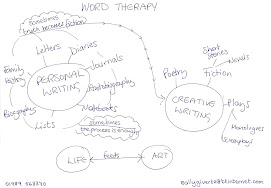
   Creative Writing at The Haven
   37 St Owen Street,
   Hereford HR1 2JB


With Sally Givertz

Fridays in the Rose Room
10am to Noon
                                                                         
Suggested donation £6 per week

All welcome

Next weekly series starts April 20th, 2012
Dates: 20th April, 27th April, 4th May.
(2 week break) then 25th May, 1st June, 8th June

For details please contact
Sally on 01989 563370


OR The Haven
014320 361061


Saturday, 10 March 2012

2012


Building Bridges

Creative Writing Project at Herefordshire Archive Service, Record Office, 2012
With Sally Givertz (Workshop Leader) and Elizabeth Semper O’Keefe (Information Services Manager)
For more information and to book a place please call the Record Office
Herefordshire Archive Service                                                                          
Herefordshire Record Office
Harold Street
                                      
Hereford 
HR1 2QX
 

Office Tel No:  01432 260750 
Email: 
archives@herefordshire.gov.uk


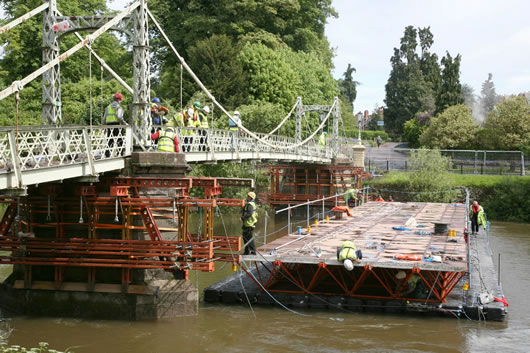
Building BridgesThe Story of the Victoria Bridge in Hereford.
3 weekly creative workshops designed for retired or unemployed people and job-seekers will take place at the County Records Office on 3 Mondays from 10am to 12 noon, in spring 2012.

1.     March 19th – To Be or Not To Be?
2.     March 26th – The Grand Opening
3.     April 2nd – Repairs and Renewals & Revelations
These sessions hope to offer inspiration and enjoyment in an informal and friendly environment.  All materials will be provided (including essentials like tea and biscuits) and no special writing skills are called for.  Everyone is welcome and the workshops are FREE but please book your place as space is limited.
We will be exploring the past and present life of the much-loved Victoria Footbridge in Hereford; also the idea of bridges in general – literally and metaphorically.  Come along and share your stories and learn something new.


   Creative Writing at The Haven
   37 St Owen Street,
   Hereford HR1 2JB


With Sally Givertz

Fridays in the Rose Room
10am to Noon

Suggested donation £6 per week

All welcome


For details please contact
Sally on 01989 563370


OR The Haven
014320 361061


Next weekly series starts April 20th, 2012
(to be confirmed) 

Thursday, 1 March 2012

Tree of Life 6 - Australia and home again

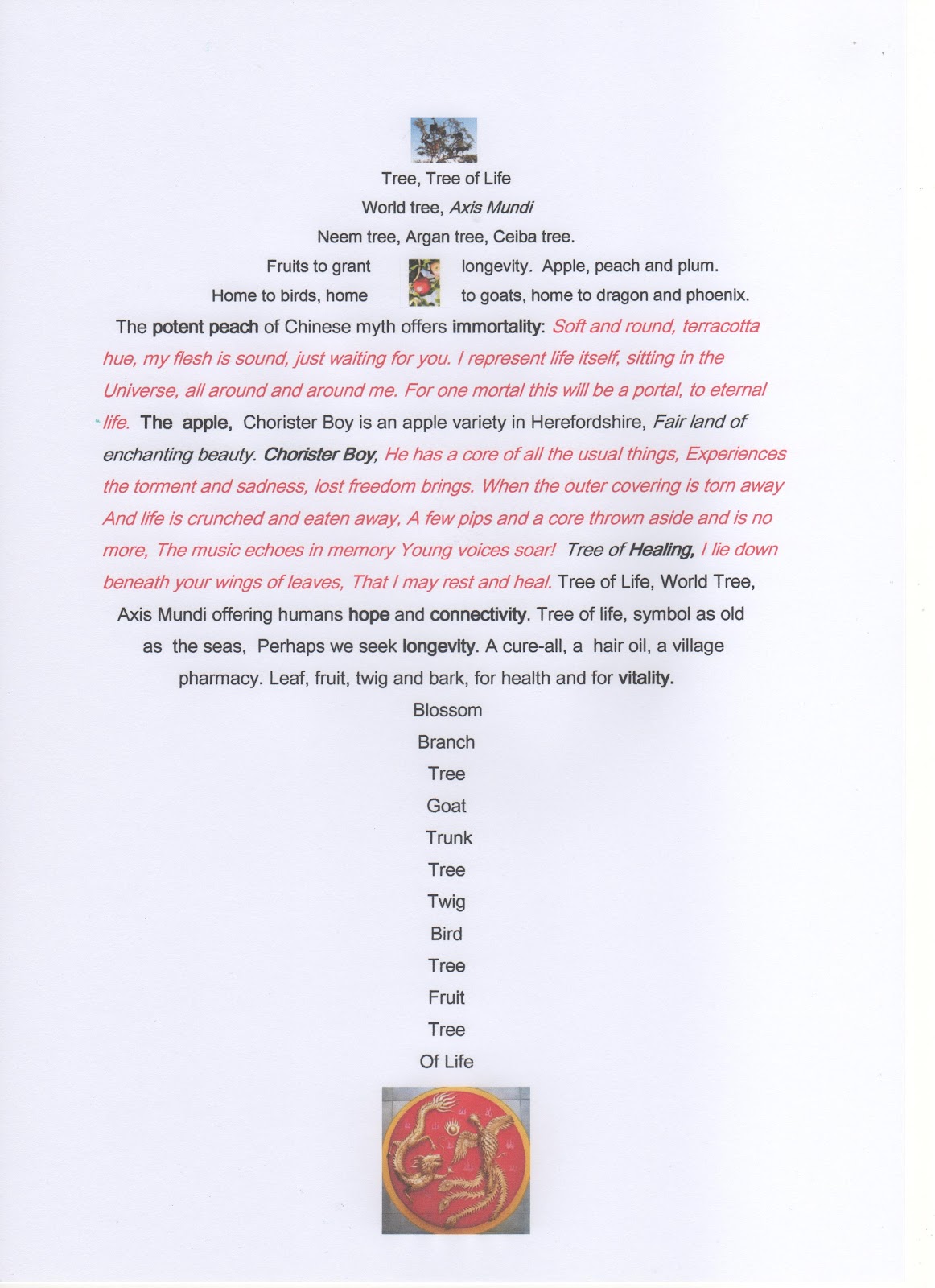
This week we looked at Aboriginal creation myths and beliefs around the Tree of Life theme. In Australia the Guloi or plum tree is one of their native sacred trees .
The Guloi  is another tree of knowledge. This tree is not forbidden to be consumed but is instead encouraged. The Guloi represents passing knowledge and culture from parents to child and so forth through the generations. Many, if not most, aboriginal stories and myths are land-centred, and reflect that interconnectedness with all of existence, that reciprocity between all, that should not be lost.

The land owns us; we don’t own the land.
We are part of the land.


Branches
Judy

I’m here, hanging
I’m here, waiting
Shall I hold on?
Or shall I drop?
I think I’ll sit here
Hanging and waiting.

 ******

Travelling branches reach the end of the line
Twigs diverted – inconsequential for a while
Like life – destination unknown.
Sonia 

Roots
Judy

What are you rooted in?
I am rooted in coal
The endless drudgery
of struggling for survival

I am rooted in Chapel
And song and poems
I am rooted in Aunties, Uncles, Cousins

At times the roots are always there
Continuous, inevitable and inescapable.


Tree Planting
Rhian

Today’s the day I will be
Rooted firmly to the ground
Enjoying the moist refreshing soil
Eager to begin my stages of development.

Pocketed in a deep chasm
Of lowly birth, but lovingly caressed
And then covered in Earth’s kisses
Not knowing my destination
Though the journey is looking upward every day

I had been especially  chosen by someone
Nurtured during a Queen’s Jubilee
Growing, perhaps to be fit for a king.


Reach for the Stars

Tasting the gentleness of the dark night and the stars
I travelled with them through light years
Tiptoeing on the edge of the universe
Embracing the void.
Sonia

We also read about Oodgeroo Noonuccal (1920 - 1993)
Oodgeroo was born in 1920 on Stradbroke Island (the island is called Minjerriba by the aboriginal people), Queensland, of the Noonuccal people of the Yuggera group. She was best known for her poetry, although she was also an actress, writer, teacher, artist and a campaigner for Aboriginal rights.

Here's one of her poems:
Municipal Gum
 by Oodgeroo Noonuccal

Gumtree in the city street,
Hard bitumen around your feet,
Rather you should be
In the cool world of leafy forest halls
And wild bird calls
Here you seems to me
Like that poor cart-horse
Castrated, broken, a thing wronged,
Strapped and buckled, its hell prolonged,
Whose hung head and listless mien express
Its hopelessness.
Municipal gum, it is dolorous
To see you thus
Set in your black grass of bitumen--
O fellow citizen,
What have they done to us?


To this we attempted some "healing" poems by way of a reply to this understandable anger.
And, to close the circle of our virtual journey we returned to Blighty with A E Houseman's uplifting poem Loveliest of Trees.


Loveliest of trees
A E Houseman (1857 - 1936)

 Loveliest of trees, the cherry now 
Is hung with bloom along the bough, 
And stands about the woodland ride 
Wearing white for Eastertide.

Now, of my threescore years and ten, 
Twenty will not come again, 
And take from seventy springs a score, 
It only leaves me fifty more.

And since to look at things in bloom 
Fifty springs are little room, 
About the woodlands I will go 
To see the cherry hung with snow. 


And before we go I have to add one more poem about our relationship with trees - this was a recurring idea throughout the sessions on Tree of Life - our affinity with trees and sense of identification with them.
A marvellous poem by Robert Frost:
  
TREE AT MY WINDOW
Robert Frost

Tree at my window, window tree,
My sash is lowered when night comes on;
But let there never be curtain drawn
Between you and me.

Vague dream-head lifted out of the ground.
And thing next most diffuse to cloud,
Not all your light tongues talking aloud
Could be profound.

But, tree, I have seen you taken and tossed,
And if you have seen me when I slept,
You have seen me when I was taken and swept  
And all but lost.

That day she put our heads together,
Fate had her imagination about her,
Your head so much concerned with outer,
Mine with inner, weather.

My thanks go to all the writers who took part in this project which was a joy to be part of:
Sonia, Rhian, Yvette, Paula, Annie, Chris, Helen, Judy, Hilary, 
and -  a Special Guest Appearance by Maggie.


Tuesday, 28 February 2012

Tree of Life - 5 South American Way

So many cultures, so little time.  We took a tiny glimpse into the beliefs of the ancient Mayan people regarding the Tree of Life. Fascinating: (thanks to Wikipedia)

The concept of world trees is a prevalent motif in pre-Columbian Mesoamerican cosmologies and iconography. World trees embodied the four cardinal directions, which represented also the fourfold nature of a central world tree, a symbolic axis mundi connecting the planes of the Underworld and the sky with that of the terrestrial world.
Depictions of world trees, both in their directional and central aspects, are found in the art and mythological traditions of cultures such as the MayaAztec, IzapanMixtecOlmec, and others, dating to at least the Mid/Late Formative periods of Mesoamerican chronology. Among the Maya, the central world tree was conceived as or represented by a ceiba tree, and is known variously as a wacah chan or yax imix che, depending on the Mayan language
World trees are frequently depicted with birds in their branches, and their roots extending into earth or water (sometimes atop a "water-monster," symbolic of the underworld). The central world tree has also been interpreted as a representation of the band of the Milky Way.    


When we think of the Big Bang theory a Creation Myth that places our origins in the stars doesn't seem quite so far-fetched:
The star clouds that form the Milky Way were seen as the tree of life where all life came from. Near Sagittarius, the centre of our galaxy, where the World Tree meets the Ecliptic was given special attention by the Maya. A major element of the World Tree is the K'awak Monster. This monster was also a mountain or Witz monster. A sacrificial bowl on its head contains a flint blade representing sacrifice, and the Kimi glyph that represents death. The Ecliptic is sometimes represented as a bar crossing the major axis of the world tree, making a form that is similar to the Christian Cross. On top of the World Tree we find a bird that has been called, the Principal Bird deity, or Itzam Ye. There is also evidence that shows the Sun on the World Tree as it appeared to the Maya at Winter Solstice.


Celebration
Yvette

Fiesta Time

Flower garlands abound
But in the street not a sound
The wind blows
The people do not show
But resounding celebration is found amongst the bells and prayers

A Night to Remember

Fiesta here is long,
Tailing into the night
Girls swirl to the
Music, rhythmic and fiery
Frenzied frivolity at its height


Rhian
South American Celebration

Senses shaking with Samba
Tempting to touch costume frills
Do you hear the bongos greeting?
Taste the carnival heating
Smell the air with aroma filled

Tango Trees
Trailing across the ballroom
Alive with faces, frozen
Near yet so distant
Gazing in passionate thrall
Orchestra straining with Jealousy, Fernando’s Hideaway,
Tijuana Brass branching out, swinging, swaying,
Rustling and roaring
Elephantine behind the palms
Evergreen palms, ever polished
Sparkling as the waxed ballroom floor.


This is a picture of the giant Ceiba (now Kapok) tree sacred to the Mayan people.  

Friday, 17 February 2012

Tree of Life 4 - Africa - Argan Tree and Goats!

We discovered that the Argan Tree grows exclusively in southwestern Morocco and yes, it's the one you often see depicted with goats climbing about in it. Strange or what?  It's amazing that the tree manages to survive at all but luckily has now become part of the "Biosphere Reserve: 


The Argan tree (Argania spinosa) grows exclusively in southwestern Morocco, where the local Berber people through the ages have used the tree's incredible resources. The Argan tree is very resistant and thrive in the arid surroundings and reminds in its the form of the olive tree. The Argan tree reaches between 150 to 200 years, surviving heat, drought and poor soil. This thorny tree gets about 8 to 10 meters high, and is often twisted and gnarled, giving goats the opportunity to climb up on the branches where they eat the leaves and fruits. The leaves are small and dark brown, the oval fruits yellow-green and becomes rock hard when they mature. The tree has a huge impact both economically and environmentally in the entire region. Berbers have in ages had the Argan tree as an income source, and today the extraction of oil from the tree's fruit has become a major export industry, which may prove to be crucial for the people's continued positive economic development.


Like the Neem Tree of India, the Argan Tree has become a sort of village pharmacy and it's ancient medicinal properties have been treasured and developed by the Berber people over  generations .Argan products have now become part of a very up-market beauty industry and Argan oil is one of the most expensive in the world.


This led to discussion and writing about beauty rituals:

Sonia

Ritual – A Memory

The water, tepid in the pan from the black-leaded range was gently poured into a jug - and so it began.  My mind is alive with the memory of my hair-washing treat, wartime style.

The dry powdered shampoo, mixed to a paste, was lovingly spread over blonde hair,  worked in and through and rinsed, and rinsed again.  This last with a dash of malt vinegar to bring out the shine, or with collected rainwater to soften. The hair was allowed to dry naturally; the term split ends was not invented – scissors trimmed any fly-away strands.

Then the unrushed brushing began: systematic strokes to the beating of hearts, untangled hair plaited, one fat one thin, never quite symmetrically correct, and the warm smile of my mother. 
And then my turn to give that love back – brushing her long, beautiful tresses for a while; chatting and knowing this closeness and watching her coil her hair up and pin it easily in place.

I grew up.  My long hair was brushed by others with love and tenderness and I coiled it up too, remembering my father’s words:
Long is the hair of a woman
Long also is her understanding.

Rhian

AFRICA

Alive with rhythm and colour
Forest framework for potential progress
Roots for many, some more modern now
Identity and inheritance
Continuity and conservation
An Amazon of opportunity, of advancement.


We were also captivated by the poem "Goat" by Jo Shapcott- here's a sample:

Goat
Jo Shapcott (b 1953)

Dusk, deserted road, and suddenly
I was a goat. To be truthful it took
two minutes, though it seemed sudden,
for the horns to pop out of my skull,
for the spine to revolutionise and go
horizontal, for the fingers to glue
together and for the nails to become
important enough to upgrade to hoof. 

And of course goats are smelly in both the active and passive senses of the word so this led on to:

Annie

 Intoxicating tang

salt air
fish
seaweed and crabs

coffee   with tia maria   melting chocolate
rosemary and lemon balm, balsam and witchazel
new wool
new baby

new puppy
new kitten
new love

roast beef, bacon, bread.

It all goes to my head!